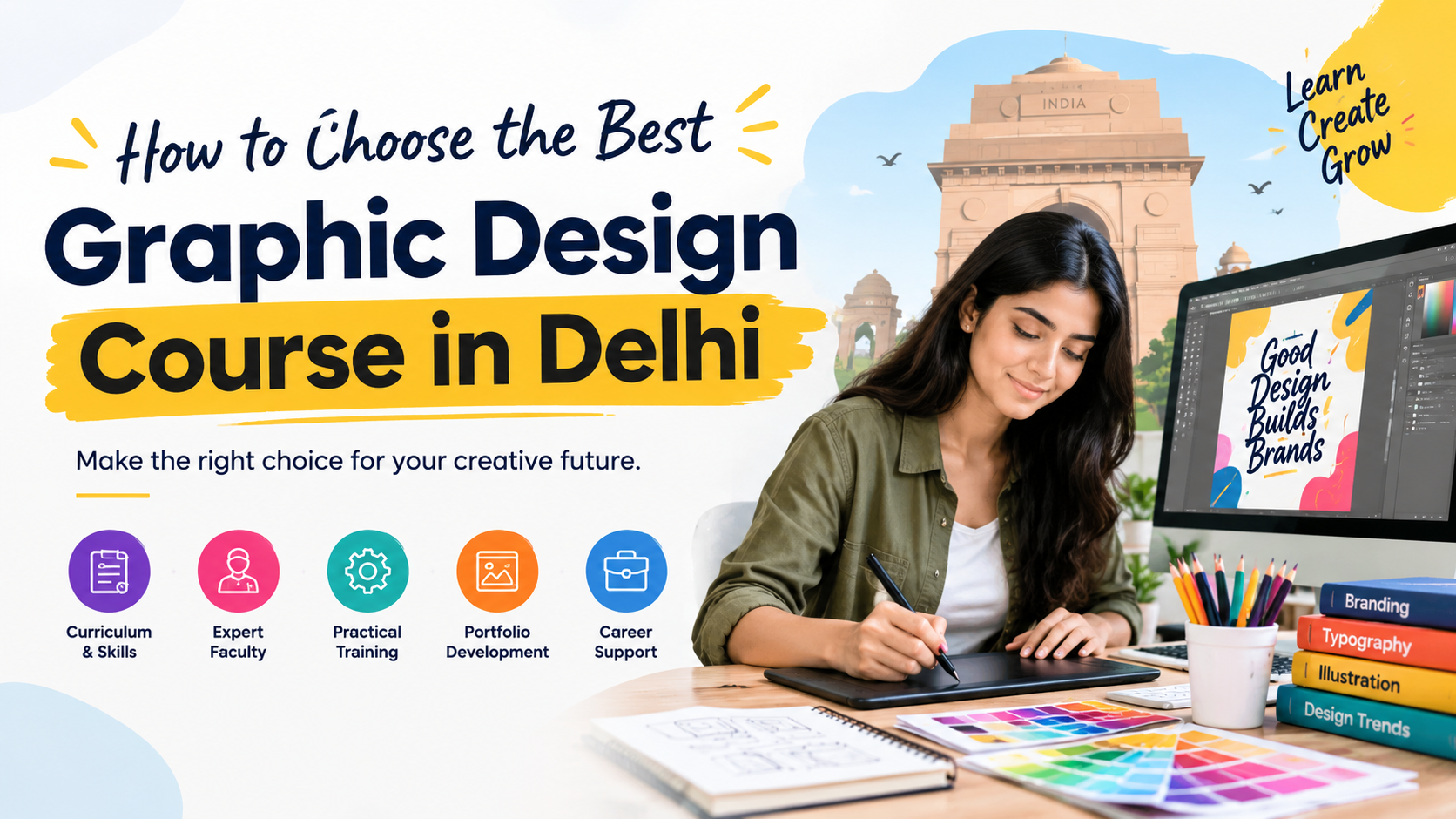
Graphic design course in delhi has become one of the most in-demand creative skills in today’s digital world. Businesses need attractive visuals for websites, social media, advertisements, branding, packaging, presentations, and marketing campaigns. As a result, students and professionals are increasingly looking for professional training that can help them build a successful career in design.
If you are planning to start your career in this field, choosing the right graphic design course in Delhi is an important decision. Delhi has numerous institutes offering graphic design programs, but not every course provides the same quality of training, practical exposure, software knowledge, or career support.
This guide will help you understand the key factors you should consider before selecting a graphic design course in Delhi.
1.Understand Your Graphic Design Career Goals
Before joining a course, determine why you want to learn graphic design. Your objective will help you choose the right program.
Some students want to become professional graphic designers, while others may want to specialize in branding, advertising, UI design, social media design, illustration, or motion graphics. Some learners may simply want to develop design skills for freelancing or their existing business.
A good graphic design course in Delhi should match your career goals and provide relevant skills. Make a list of the areas you are interested in and check whether the course covers them.
2. Check the Graphic Design Course Curriculum
The curriculum is one of the most important factors when selecting a graphic design course. A professional program should cover both fundamental design concepts and industry-relevant software.
Look for topics such as:
- Principles of graphic design
- Typography
- Colour theory
- Layout and composition
- Branding and identity design
- Logo design
- Advertising design
- Social media graphics
- Print design
- Digital design
- Image editing
- Illustration
- Portfolio development
Software training is also essential. Depending on the course, you may learn tools such as Adobe Photoshop, Illustrator, and InDesign, along with other industry-relevant applications.
Don’t choose a course simply because it teaches many software programs. Understanding design principles and learning how to apply software creatively are equally important.
3. Look for Practical Training in Graphic Design
Graphic design is a practical skill. Reading about design concepts is useful, but you need regular practice to become confident.
When comparing a graphic design course in Delhi, find out how much practical training is included. Ask whether students work on real-world projects such as logos, posters, brochures, social media creatives, advertisements, packaging, and brand identity projects.
Project-based learning can help you understand how professional design assignments work. It also gives you opportunities to experiment, make mistakes, receive feedback, and improve your work.
4. Check the Faculty of the Graphic Design Course
Experienced instructors can make a significant difference in your learning experience. Before enrolling, research the faculty members and their professional backgrounds.
Look for trainers who understand both design theory and practical industry requirements. Instructors with professional experience may be able to explain how design projects are handled in real working environments.
You can also check whether the institute provides opportunities for students to receive individual feedback. Regular feedback can help you identify weaknesses and improve your design skills.
5.Review Student Projects and Graphic Design Portfolios
One of the easiest ways to evaluate a design institute is by looking at the work produced by its students.
Ask the institute to show student portfolios and completed projects. Look for variety, creativity, technical quality, typography, composition, and originality.
A strong portfolio should demonstrate that students have learned how to solve different design problems rather than simply creating attractive images.
You can also search online for reviews, student experiences, and publicly available work before making your decision.
6. Look for Graphic Design Portfolio Development
Your portfolio is extremely important when applying for graphic design jobs or freelance projects. Employers generally want to see what you can create rather than only your course certificate.
Therefore, choose a graphic design course in Delhi that includes portfolio development.
During the course, you should ideally create different types of projects, such as:
- Logo and branding projects
- Social media campaigns
- Posters and advertisements
- Brochures and marketing materials
- Packaging designs
- Typography projects
- Digital illustrations
- Website or UI visuals
A well-organized portfolio can demonstrate your creativity, technical ability, design thinking, and versatility.
7. Compare Graphic Design Course Duration and Fees
Different institutes offer graphic design courses with different durations. Some programs are short-term, while others are designed as comprehensive long-term courses.
Think about your current schedule before choosing one. If you are a student, you may prefer weekend or evening classes. Working professionals may need flexible schedules.
However, don’t select a course only because it is short. A very short program may not provide enough time to learn design fundamentals, practice software, complete projects, and develop a professional portfolio.
Choose a duration that provides enough time for meaningful learning and practice.
8. Compare Fees and What You Receive
Course fees can vary significantly between institutes. While price is an important consideration, it should not be the only factor.
Instead of choosing the cheapest course, compare what is included in the fee. Consider:
- Number of training hours
- Software training
- Practical projects
- Faculty experience
- Portfolio development
- Study materials
- Assignments and feedback
- Career guidance
- Internship opportunities
- Placement assistance
A course with a higher fee may offer more comprehensive training, while an inexpensive course may provide only basic software instruction. Compare the overall value before making your decision.
9.Check Career and Placement Support
If your goal is to build a career in graphic design, career support can be useful after completing your training.
Ask the institute whether it provides services such as resume development, portfolio reviews, interview preparation, internship assistance, job opportunities, or placement support.
However, don’t choose an institute solely because of placement claims. Ask for clear information about the type of career support provided and understand what the institute actually offers.
10. Consider Location and Learning Environment
Delhi is a large city, so the location of the institute can affect your daily routine. Consider travel time, accessibility, classroom facilities, and the overall learning environment.
A convenient location can make it easier to attend classes consistently. You should also check whether the institute provides suitable computers, design software, classroom facilities, and other resources required for practical training.
If online or hybrid classes are available, evaluate the quality of those sessions before choosing that option.
11. Attend a Graphic Design Course Demo Class
If possible, attend a demo class before enrolling in a graphic design course in Delhi. A demo can help you understand the teaching style, classroom environment, and interaction between students and trainers.
During the demo, pay attention to whether the instructor explains concepts clearly and whether students get opportunities to ask questions.
You can also use this opportunity to ask about the syllabus, projects, software, assignments, and portfolio development.
12.Check Reviews Before Choosing a Graphic Design Course
Online reviews can provide useful information, but they should not be your only source of information.
Read multiple reviews instead of relying on one or two comments. Look for recurring feedback about teaching quality, practical training, faculty support, facilities, and career assistance.
You can also speak with current or former students if possible. Their experiences may help you understand what the learning process is actually like.
Conclusion
Choosing the right graphic design course in Delhi requires more than simply comparing course fees or institute names. You should consider the curriculum, practical training, faculty, software skills, student projects, portfolio development, course duration, facilities, and career support.
The right course should help you develop both technical and creative skills. It should give you opportunities to practice, work on different projects, receive feedback, and build a professional portfolio.
Before enrolling, research multiple institutes, attend demo classes, compare their curricula, review student work, and understand exactly what is included in the course. With careful research and consistent practice, a professional graphic design course can provide a strong foundation for careers in branding, advertising, digital media, publishing, social media, freelancing, and other creative industries.
If you are serious about becoming a graphic designer, focus on skills, practical experience, and portfolio quality rather than choosing a course based only on its name or price. A thoughtful decision at the beginning can help you make better progress toward your long-term creative career.